From Drifting Apart to Closer Bonds: How Weekend Online Shopping Reconnected Us
Friendships change over time—especially when life gets busy. Weekends used to mean coffee catch-ups, but lately, they felt lonely. Then we started sharing online shopping finds, comparing styles, and sending each other links “just because.” What began as a casual habit slowly turned into a new way of staying close. It wasn’t about the purchases—it was about the connection. That simple shift brought laughter back into our messages, rekindled conversations we thought had faded, and reminded us that even in the busiest seasons of life, we could still show up for each other. And honestly? I didn’t see it coming. But now, I can’t imagine our friendship without it.
The Slow Drift: When Friendships Fade Without Notice
It wasn’t dramatic. There was no fight, no misunderstanding, no grand moment of falling out. We just… drifted. One day, I realized I hadn’t heard from my closest friend in weeks—not because we were angry, but because life had simply pulled us in different directions. She was adjusting to a new job, I was helping my mom through a health scare, and our other friend was deep in the baby sleep-deprived phase. We were all doing our best, but somewhere along the way, we stopped doing it together.
I missed the little things: the random voice notes of her singing off-key in the kitchen, the screenshots of funny memes with a “you need this today” caption, the way we used to text each other photos of our breakfasts just to say “good morning.” Those tiny threads of connection had faded, replaced by polite “how are you?” messages that never led to real conversation. And it wasn’t just us. I noticed it with other friendships too—people I once talked to weekly now felt like distant acquaintances. We were living parallel lives, but not shared ones.
What surprised me most was how normal it felt. Like this was just what happens when you grow up. Responsibilities pile up, time shrinks, and friendships become something you “get to” when you can, not something you prioritize. But deep down, I knew that wasn’t enough. I didn’t want to look back in ten years and wonder how we let such a meaningful bond slip away. I wanted to feel close again. I just didn’t know how—until a simple link changed everything.
A Simple Click That Changed Everything
It started with a sweater. I was browsing a popular online store on a quiet Saturday morning, sipping tea and scrolling without any real intention to buy. Then I saw it—a soft, oatmeal-colored knit with slightly oversized sleeves and a relaxed fit. And instantly, I thought of her. Not because she’d said she wanted a new sweater, but because it just felt like her. Calm, warm, effortlessly put together. So I clicked the share button, sent the link with a message that said, “This is so you,” and went back to my coffee.
Two minutes later, my phone buzzed. “OMG, I was literally thinking about buying something like this!” she replied, followed by a string of laughing emojis. That one message opened the floodgates. We ended up talking for nearly an hour—not about the sweater, but about how we both craved comfort lately, how our style had shifted from “dressing for the world” to “dressing for ourselves,” and how nice it felt to be seen, even in something as small as a clothing suggestion.
That moment was a turning point. It wasn’t the sweater that mattered—it was the feeling behind it. The “I was thinking of you” that traveled through a digital link. It reminded me that care doesn’t always need words. Sometimes, it shows up as a perfectly timed product recommendation. From that day on, we started doing it more. A cozy throw blanket for another friend who’d mentioned her living room felt chilly. A floral-print robe for the one who loved anything that made her feel like she was on vacation. Each share carried a quiet message: You’re on my mind. I remember what you like. I’m still here.
How Online Platforms Became Our New Hangout Spot
We didn’t turn into big shoppers. In fact, most of the things we shared, we never actually bought. But that wasn’t the point. What mattered was the act of browsing together, even when we were miles apart. The platforms we used—common, well-known sites with easy sharing features—became our new coffee shop, our new park bench, our new place to just be together.
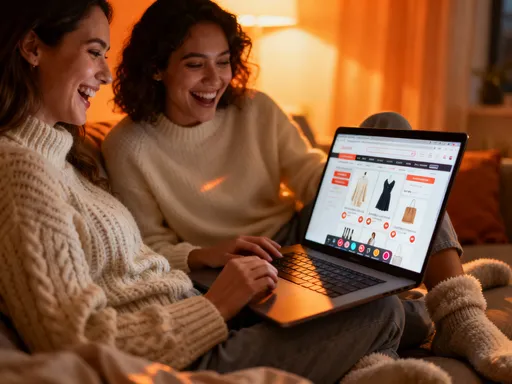
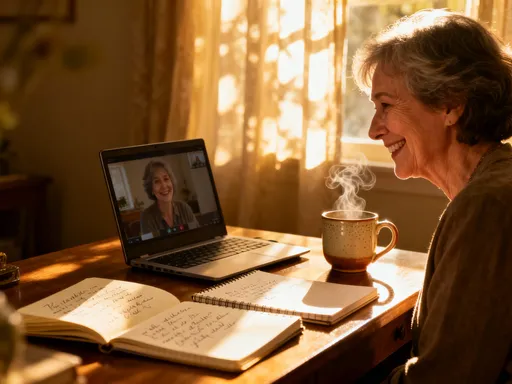
We started saving items to shared wishlists, adding notes like “for your future beach trip” or “perfect for Zoom meetings when you want to feel fancy on top and comfy on the bottom.” We’d send each other alerts with captions like “Mood booster incoming!” when we found something bright, playful, or just plain fun. One weekend, we even coordinated our video call outfits using matching lounge sets we’d found on the same site—soft, matching colors, ridiculously comfortable. We laughed the whole time, calling ourselves “the pajama squad,” but underneath the joke was something real: we were finding ways to be together, even when we couldn’t be.
The screen, which I once blamed for making us feel disconnected, became a bridge instead. It wasn’t replacing face-to-face time—we still hoped for that—but it was filling the gaps in a way that felt natural and light. There was no pressure, no scheduling stress, no guilt about not having enough time. Just a simple, joyful way to stay in each other’s worlds. And honestly, it felt like breathing again.
Beyond the Purchase: The Emotional Language of Shared Finds
What surprised me most was how much meaning we packed into something as ordinary as a product link. That’s when I realized: we weren’t just sharing items. We were speaking a new emotional language. Sending someone a candle in their favorite scent wasn’t about home fragrance—it was saying, “I know you need to relax.” Recommending a journal with a floral cover wasn’t about stationery—it was saying, “I remember you wanted to start writing again.”
These small digital gestures carried empathy. They showed we were paying attention, even from a distance. And in a world where everyone is overwhelmed, being seen matters more than ever. One friend went through a rough patch after losing her job. I didn’t know what to say, but I found a soft, oversized cardigan in her favorite color and sent it with a simple note: “For cozy days. You’ve got this.” She called me later, voice a little shaky, and said, “I’ve worn it every day this week. It feels like a hug.”
That’s the thing—technology didn’t create our bond. We built that over years of real, messy, beautiful friendship. But it gave us a new way to express it. A way that fit into our lives now, with all the chaos and constraints. We weren’t meeting for brunch, but we were still showing up. And sometimes, that’s enough. A well-chosen link can carry as much love as a long letter—maybe even more, because it’s rooted in the everyday.
Turning Browsing into a Ritual
Rituals keep relationships alive. They give us something to return to, a rhythm that grounds us. So we created one: Sunday evenings, 7 PM. Our “digital window shopping” time. No pressure to buy, no judgment if someone forgets—just 30 minutes of scrolling, sharing, and chatting. We treat it like a soft appointment, the kind that doesn’t feel like a chore but like a comfort.
During those sessions, we laugh at the absurd—like the cat-shaped heating pad or the mug that changes color when it’s hot. We debate the merits of linen vs. cotton, high-waisted vs. mid-rise jeans, and whether matching sets are a lifestyle or a trend. We celebrate wins: “I found the perfect work-from-home pants!” or “This tote fits my laptop, water bottle, AND my book!” And sometimes, the conversation drifts into deeper territory—how we’re feeling, what we’re worried about, what we’re hoping for. The shopping becomes the doorway, but the connection is what stays.
What I love most is how this ritual fits into our real lives. It doesn’t require gas money, babysitters, or perfect weather. It works whether someone is on a break between meetings or snuggling under a blanket with a sleeping child nearby. It’s flexible, forgiving, and full of grace. And it’s become something we all look forward to—a small pocket of joy in an otherwise hectic week. It’s not the same as our old coffee dates, but in its own way, it’s just as meaningful.
When Technology Supports, Not Steals, Human Connection
I’ll admit, I used to be skeptical of tech’s role in relationships. I worried that screens were making us more isolated, that we were trading real conversations for quick likes and emoji reactions. And sometimes, that’s true. But this experience taught me something important: it’s not the technology that’s the problem—it’s how we use it.
When we use it with intention, tech can actually deepen our connections. A shared link can spark a conversation about self-worth, aging, or what makes us feel beautiful. A simple “look at this!” can turn into a 45-minute talk about confidence, change, or the kind of life we want to live. The platform doesn’t matter—it could be any well-known shopping site or social marketplace. What matters is the heart behind the share.
We’ve all seen how tech can divide—endless scrolling, comparison, the pressure to present a perfect life. But it doesn’t have to be that way. When used as a tool for care, it can become a lifeline. It reminds us that we don’t have to choose between staying connected and living our busy lives. We can do both. And sometimes, the most human moments happen not in silence, but in the small, clickable gestures that say, “I’m here. I see you. I care.”
Rebuilding Intimacy in Small, Clickable Ways
Our friendship didn’t transform overnight. There wasn’t a single moment when we suddenly felt “close again.” It happened slowly, one shared link at a time. A pair of slippers for cold floors. A cookbook with easy weeknight meals. A plant stand that made someone’s apartment feel more like home. Each one was a tiny thread, weaving its way back into the fabric of our bond.
What I’ve learned is that intimacy doesn’t always need grand gestures. It grows in the small, consistent acts of attention. It’s in the remembering, the noticing, the reaching out—even if it’s just to say, “This made me think of you.” And technology, when used with love, can carry that attention across miles and busy schedules.
Today, our messages are full again. Not with long essays, but with links, screenshots, and voice notes saying, “You need this!” or “Remember this?” We still haven’t had that long weekend getaway we keep talking about, but we don’t feel the distance the way we used to. Because we’ve built something new—a rhythm, a language, a way of staying close that works for who we are now.
If you’ve ever felt a friendship fading, I want to tell you this: it’s not too late. You don’t need a big plan or a dramatic reunion. Start small. Send a link to something that reminds you of them. Tag them in a post with a sweet caption. Share a find with a simple “thought of you.” Let the screen become a space of care, not just consumption. Because connection isn’t about how much time you have—it’s about how much heart you put into the moments you do share. And sometimes, all it takes is one click to bring a friendship back to life.