Tired of Rainy Days Ruining Your Family’s Laundry Routine? This Smart Rack Changed Everything
We’ve all been there—damp clothes hanging for days, musty smells creeping in, and the constant battle of finding space to dry things properly. I used to dread rainy seasons, especially with kids coming in from playtime soaked. But after living with a smart clothes drying rack for over a year, my home feels lighter, my laundry days are stress-free, and surprisingly, my family has started talking more—laughing while folding, sharing stories as we unload warm, fresh-smelling clothes. It’s not just about dry laundry. It’s about reclaiming time, space, and moments that matter. This small change didn’t just fix a household problem—it quietly reshaped how we live together.
The Daily Struggle That No One Talks About
Let’s be honest—laundry is never just about clothes. It’s about timing, space, mood, and the invisible load we carry when things don’t go smoothly. I remember one particularly gray week last spring when the rain just wouldn’t stop. The sky stayed low and heavy, and so did my spirits. My balcony was cluttered with drying lines full of half-wet towels and school uniforms. Indoors, I’d strung up portable racks near the heater, but the air felt thick and stale. Every morning, I’d check the same damp socks from two days prior, hoping they’d magically dry overnight. They never did.
And it wasn’t just the clothes. The humidity crept into everything—our sheets felt clammy, the towels smelled faintly sour, and I caught myself snapping at the kids for tracking mud on the floor, when really, I was just tired of the mess that dampness creates. That’s when I realized: this wasn’t just a laundry problem. It was a home problem. The kind that wears you down slowly, one soggy towel at a time. We were all adjusting—wearing slightly damp clothes, re-washing things just to get the smell out, and avoiding the laundry corner like it was a chore monster waiting to pounce. I started wondering: why are we still fighting nature in our own homes?
For years, I thought this was just part of life—especially in homes with kids, pets, or small spaces. But then I began noticing how often I’d scroll past posts from friends in sunnier climates, their laundry flapping in golden afternoon light, looking effortless. I felt a pang of envy, not because of the weather, but because of the peace it seemed to bring. Their homes looked calm. Ours felt chaotic. I didn’t want to move countries—I just wanted to feel that kind of calm, too. That’s when I started looking for a real solution, not just another temporary fix.
Why I Decided to Try a Smart Drying Rack
The final straw came after a weekend camping trip. The kids had come home covered in mud, rain, and pure joy—exactly how childhood should be. But the aftermath? Mountains of wet gear. Raincoats, boots, socks, even sleeping bags. I hung everything I could on our old metal rack, turned on the fan, and hoped for the best. Three days later, the sleeping bags were still damp in the middle. My partner walked in, sniffed the air, and said, 'Do we have a basement now?' It wasn’t a joke. The mildew smell had settled in, and I felt defeated.
That night, I sat at the kitchen table with my laptop, searching for something—anything—that could break this cycle. I didn’t want a full laundry overhaul. I didn’t need a second washing machine or a whole-house dehumidifier. I just needed something that could keep up with real life. That’s when I found smart drying racks. At first, I was skeptical. The name sounded flashy—'smart' anything makes me think of complicated apps and devices that break after six months. But the more I read, the more I realized these weren’t just fancy racks. They were designed for people like me—parents, caregivers, busy homemakers who need things to work, quietly and reliably.
What stood out was how simple they looked. No tangled wires, no loud motors. Just a sleek frame with built-in heating rods and a fan system that gently circulated warm air. Some models even had remote controls or smartphone apps, but I didn’t care about that at first. I cared about whether it could dry a load of wet towels in a reasonable time, without making my electricity bill spike. I also wanted something safe around kids and pets—no exposed hot surfaces, nothing that could tip over. After comparing a few options, I chose one with adjustable height, child-safe heating, and a quiet operation mode. It wasn’t the most expensive, but it felt like it was built for real homes, not tech showrooms.
When it arrived, I was surprised by how easy setup was. No tools, no drilling—just unfold, plug in, and go. I placed it in the corner of the utility room, near the window, and ran my first test load: a mix of kids’ rain gear and bath towels. I turned it on, set the timer, and walked away. Within two hours, everything was dry. Not just surface-dry, but thoroughly warm and soft. I buried my face in a towel and inhaled—clean, fresh, no mustiness. I actually laughed out loud. It felt like I’d been given back a piece of my time, my space, and my peace of mind.
A Year Later: What Actually Changed
Now, after more than a year of daily use, I can say this wasn’t just a passing trend or a shiny gadget that lost its charm. It’s become part of the rhythm of our home—like the coffee maker or the rice cooker. I use it year-round, not just in winter or rainy seasons. In summer, when humidity spikes, it helps dry delicate items like bras and baby clothes without leaving them outside where pollen and dust stick. In winter, it cuts drying time in half compared to air-drying indoors. Even during spring, when the weather can’t decide between sun and showers, it’s my safety net.
The durability has been impressive. The frame is still sturdy, the heating elements work just as well, and the remote control hasn’t glitched once. I was worried about energy use, but it’s actually quite efficient. It uses less power than my hair dryer, and because it dries clothes faster, I’m not leaving it on for hours. I’ve also found that I use my tumble dryer less—maybe once a month now, only for bulky comforters. That’s saved money and reduced wear on my clothes, which I didn’t expect but deeply appreciate.
Maintenance is minimal. I wipe it down every few weeks with a damp cloth, and once in a while, I vacuum the fan vents to keep airflow smooth. The rack folds flat when not in use, so it doesn’t take up space. I’ve even used it in the living room during heavy laundry weeks, and it blends in—no one would guess it’s a high-tech device. It’s quiet, too. The fan hums softly, like background white noise, never loud enough to interrupt a phone call or a bedtime story.
Of course, there were small adjustments. At first, I overloaded it, trying to dry too much at once. That slowed things down. I learned to space out clothes evenly and leave gaps for air to circulate. I also started using the auto-stop feature, which turns the rack off when the clothes are dry. That’s been a game-changer for busy days when I forget to check. Over time, it stopped feeling like a gadget and started feeling like a helper—always there, never demanding attention, just making things easier.
More Than Dry Clothes: How It Brought Us Closer
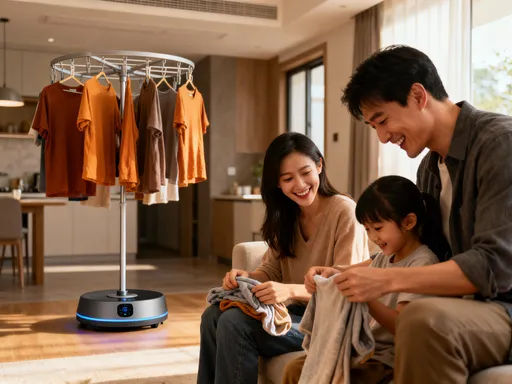
Here’s the part I never expected: this little rack didn’t just dry clothes. It brought us together. Before, laundry was something I did alone, usually late at night after everyone was asleep. It felt like one more invisible task on my list. Now, it’s become a shared moment. The kids know when the rack is on—they can smell the warm cotton, and they come running. 'Mom, is it ready?' they’ll ask, eager to help fold.
I started inviting them to join me, turning it into a little ritual. We’d put on soft music, fold together, and talk about their day. At first, it was just small talk—'How was school?' 'What did you eat for lunch?' But slowly, it became more. One evening, my daughter told me about a friend who’d been leaving her out at recess. We folded socks while she spoke, and I realized how rare it was to have her full attention without screens or distractions. The rack had created a space—not just physical, but emotional—where we could connect.
My partner started helping too. He’d come home and check if anything needed unloading. 'Smells good in here,' he’d say, pulling out a warm shirt. 'Feels like home.' Those little moments added up. We weren’t just doing laundry—we were sharing time. I noticed we were all more patient, more present. Even our dog hangs around, curling up under the rack when it’s on, drawn to the warmth. It’s become a cozy corner of the house, a place of comfort and quiet connection.
Psychologists talk about how shared routines build family bonds. I never thought a drying rack would become one of ours, but it did. There’s something grounding about handling clean clothes together—feeling the warmth, smelling the freshness, passing items back and forth. It’s simple, but it matters. In a world that’s loud and fast, this slow, quiet time has become something I look forward to. It’s not about perfection. It’s about presence.
How It Fits Seamlessly into Real Home Life
One of my biggest concerns before buying was whether it would feel like an intrusion—another machine taking over my home. But I was wrong. The design is clean and minimalist. It doesn’t look like a piece of tech; it looks like furniture. I’ve seen versions in white, gray, and even wood-look finishes that blend into different decors. Mine is in soft white, and it stands in the utility room like a quiet sentry, never demanding attention.
It’s also incredibly space-efficient. In small apartments or homes without balconies, this can be a lifesaver. You don’t need outdoor access. You don’t need a laundry room. A corner near a window or even a closet with good ventilation works. I’ve heard from friends in city apartments who use theirs in the hallway or bedroom—fold it out at night, use it, fold it back in the morning. It’s that flexible.
The smart features are actually useful, not gimmicky. The remote control lets me turn it on from another room—perfect if I’m cooking and remember a load needs drying. Some models have apps that let you start it from work or set schedules. I use the timer feature daily: I load it in the morning and set it to run during the day, so everything’s dry by evening. The auto-stop safety feature gives me peace of mind—no more worrying about leaving it on too long.
And because it heats gently, it’s safe for kids’ clothes, delicates, and even baby items. I no longer worry about shrinking or damaging fabrics. It dries evenly, without the intense heat of a tumble dryer, so clothes last longer. I’ve noticed my kids’ school uniforms hold their shape better, and my favorite knit sweater hasn’t stretched out. It’s one of those upgrades that pays for itself over time, not just in energy savings, but in the lifespan of your wardrobe.
Practical Tips for Getting the Most Out of Yours
If you’re thinking about getting one, let me share what’s worked for me. First, don’t overload it. I learned this the hard way. When I tried to dry six towels at once, it took forever. Now, I space things out—leave room between items so air can flow. I also rotate heavier items to the bottom bars, where airflow is strongest. Lighter things like socks and underwear go on the top or outer edges.
Timing matters. I run it during the day when the house is empty, so it doesn’t add heat to living spaces. In winter, I sometimes use it in the evening to add a bit of warmth to the room—like a gentle radiator with a bonus. I also open a window nearby to let in fresh air, which helps reduce humidity and keeps clothes smelling crisp.
Scheduling is your friend. I set it to start after the morning rush, so it’s done by the time we get home. If I wash sheets on Saturday morning, I time the rack to finish just before lunch—perfect for remaking the bed. I’ve even synced it with my kids’ nap times, so the quiet hum becomes part of their sleep routine.
And don’t underestimate the power of making it a team effort. I gave each kid a small basket for their clothes. When the rack is done, they grab their basket and fold their items. It’s not perfect—there are lopsided folds and mismatched socks—but it’s teaching them responsibility and giving us time together. I always say, 'This isn’t just laundry. It’s us time.' And they get it.
Why This Small Upgrade Feels Like a Big Win
Looking back, I realize I wasn’t just tired of wet clothes. I was tired of feeling like I was constantly fighting against my home. This small upgrade didn’t make headlines. No one posted about it on social media. But it changed the texture of our days. The air in our house is fresher. The laundry corner isn’t a source of stress anymore. And we have more time—time to talk, to rest, to just be.
That’s the thing about good technology: it shouldn’t draw attention to itself. It should make life easier without making you feel like you need a manual. This rack isn’t loud, flashy, or complicated. It’s quiet, reliable, and kind. It works when I need it, stays out of the way when I don’t, and keeps giving—dry clothes, better air, and more moments with the people I love.
In a world that’s always pushing us to do more, buy more, achieve more, this feels different. It’s not about chasing perfection. It’s about creating a home that feels good. Warm towels. Fresh sheets. A child’s voice saying, 'Mom, can we fold together?' That’s the real win. And it started with something as simple as a rack that dries clothes a little faster, a little smarter, and with a little more care. If you’re still battling damp laundry, I hope you’ll consider giving yourself this small kindness. You might just find, like I did, that it brings more than dry clothes—it brings peace.