More Than Nostalgia: How Shared Photo Albums Brought Our Family Closer at Night
Family evenings used to feel scattered—everyone on their own phone, lost in separate worlds. Then we started using a simple shared photo album, viewed together before bed. It wasn’t about the tech; it was about connection. With soft lighting and cozy blankets, we began rediscovering old trips, laughing at childhood pictures, and sharing stories we’d nearly forgotten. That small ritual didn’t just preserve memories—it quietly brought us back to each other. And what started as a quiet experiment turned into something far more meaningful: a nightly moment of warmth, presence, and belonging that we all began to look forward to.
The Quiet Gap in Our Evenings
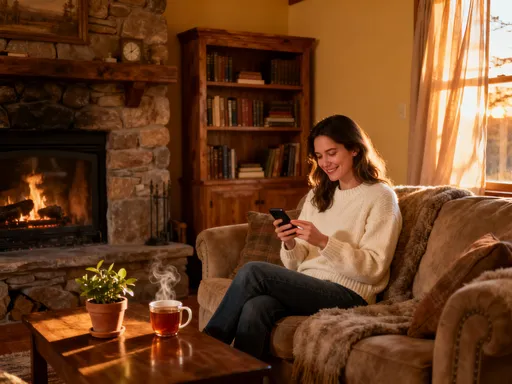
There was a time when our living room felt full, but the silence between us was louder than any conversation. We’d all be there—my husband on the couch, the kids curled up on the floor, me folding laundry nearby—but each of us was in our own digital world. The glow of screens lit up our faces like tiny campfires, each one drawing us inward instead of toward one another. Dinner used to be the end of the day’s business. After that, it felt like everyone just… disappeared, even while staying in the same room.
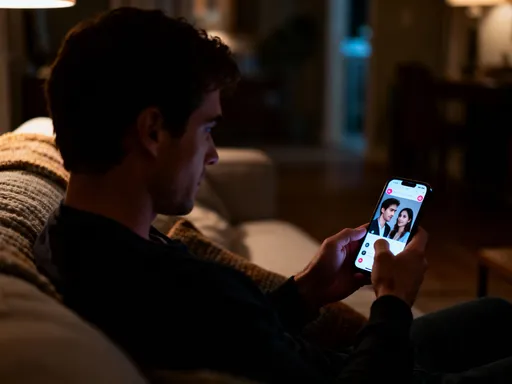
I remember one night, I looked up from my phone and realized no one had spoken in over twenty minutes. The kids were watching videos with headphones on. My husband was scrolling through news headlines. And I? I was replying to an email I could’ve waited until morning. It wasn’t that we were unhappy. We were just… disconnected. Like pieces of a puzzle scattered on the table, not yet clicked into place. I missed the easy chatter, the spontaneous laughter, the kind of moments that used to happen when we didn’t have so many distractions pulling us in different directions.
That’s when I started wondering—what if we could reclaim just one part of the evening? Not with a big family meeting or some forced activity, but with something soft, simple, and natural. Something that didn’t feel like another task on the to-do list. I wanted warmth, not performance. Presence, not pressure. And that’s how the idea of a shared photo album came in—not as a tech fix, but as a gentle invitation to remember who we are, together.
Finding a Shared Language Through Old Photos
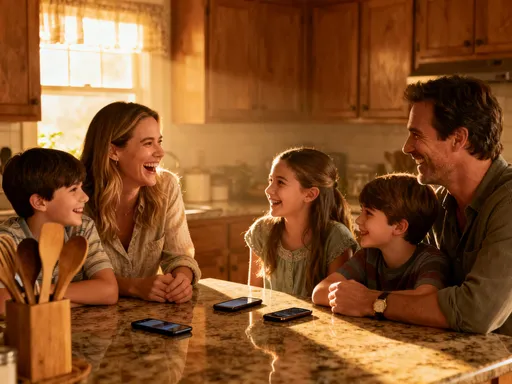
The first time we tried it, I didn’t say much. I just opened a shared album on the tablet and said, 'Hey, remember this trip to the lake house?' A picture of my oldest daughter covered in mud, grinning like she’d won the lottery, popped up. Within seconds, everyone leaned in. 'I forgot how much fun that was!' someone said. Then another voice: 'Wait, didn’t we almost lose the kayak that day?' And just like that, the room came alive.
What surprised me most wasn’t the laughter or the memories—it was how effortlessly the conversation flowed. Photos became our shared language. A single image could spark a ten-minute story, a forgotten detail, a moment of connection that had been buried under grocery lists and soccer practices. My younger son, who usually says two words at dinner, suddenly had opinions about every beach trip we’d ever taken. 'Why did we stop going to Cape Cod?' he asked. That question led to a conversation about time, money, growing up, and how much we all missed being near the ocean.
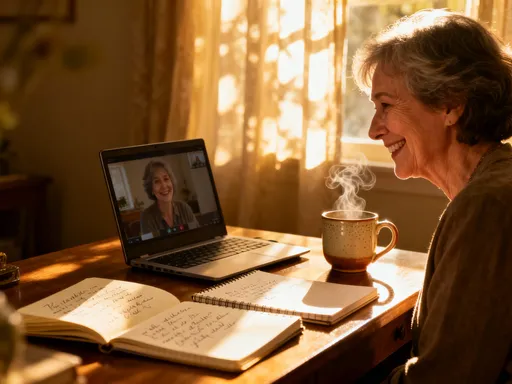
And it wasn’t just the kids. My mother-in-law, who lives two states away, started adding her own photos—black-and-whites from her childhood, scanned in and uploaded with shaky hands but so much love. Seeing those made my husband emotional. 'I never knew Grandma used to ride a motorcycle,' he said, stunned. 'She looked so fearless.' That one comment opened a door. The next time she visited, he sat with her for an hour, asking questions he’d never thought to ask before. The album wasn’t just showing us the past—it was helping us understand each other in the present.
The beauty of it was that no one had to be tech-savvy. The app we used was simple—automatic uploads from our phones, private sharing, no complicated settings. Everyone could add, view, or react with a heart or a comment. No pressure. No performance. Just a digital scrapbook that grew quietly, like a garden tended in the background, ready to bloom when we needed it most.
Why Evening Moments Matter Most
There’s something about nightfall that makes us softer. The day’s armor comes off. The to-do list fades. The house settles into a kind of hush, like the world is breathing out. That’s when we’re most open—not to big talks or deep therapy, but to small, tender moments of connection. And that’s why evenings became our sweet spot for photo time.
At first, I tried doing it after dinner, but it felt rushed. There were still dishes, homework, bedtime routines crowding in. But when we moved it to just before lights out—when the kids were in pajamas, the dogs were curled up, and the lights were low—everything changed. The energy shifted. We weren’t trying to squeeze something in. We were allowing something to unfold.
Evening is when we’re tired, yes, but also more present. The noise of the day has quieted, and our hearts have space to listen. A photo of my daughter’s first ballet recital didn’t just make us laugh at her wobbly pirouette—it reminded me of how nervous I’d been that day, how proud I felt watching her take the stage. I shared that, and my husband said, 'I forgot how much you used to worry about everything.' It wasn’t criticism. It was recognition. And in that moment, I felt seen.
Technology, when used with care, can meet us in that vulnerable space. It doesn’t have to be loud or flashy. It can be gentle—like a nightlight for the soul. The shared album didn’t distract us from the moment. It deepened it. It gave us a reason to pause, to look up, to say, 'Remember this?' And in doing so, it helped us remember each other.
Choosing Tools That Fade Into the Background
I’ll be honest—I was worried this would feel like another screen chore. Another app to manage, another password to remember, another thing to go wrong. But the key was finding tools that didn’t demand attention, but supported it. We didn’t want a flashy slideshow or a complicated editing suite. We wanted something that just… worked. Something that felt like an extension of our home, not a gadget in it.
We landed on a cloud-based photo service with private sharing and automatic syncing. Once set up, it ran quietly in the background. When someone took a picture—of a birthday cake, a dog in a sweater, a sunset from the back porch—it showed up in the album for everyone to see. No manual uploads. No extra steps. Just life, showing up as it happened.
We also got a small digital photo frame for the living room. It cycles through memories on its own, glowing softly in the corner like a silent storyteller. Sometimes, I’ll walk by and catch a glimpse of my son blowing out candles on his fifth birthday, or my husband and me on our anniversary trip. It’s not intrusive. It’s inviting. And more than once, I’ve heard one of the kids say, 'Hey, look at this!' and the whole family gathers around for a mini-memory moment.
Another game-changer was voice-assisted browsing. On nights when my hands were full or my eyes were tired, I’d just say, 'Show photos from last summer,' and the tablet would pull them up. No tapping, no scrolling. Just a natural way to access what mattered. The goal wasn’t to impress anyone with tech—it was to let the technology disappear so the people could shine.
Creating a Ritual, Not a Task
The difference between something that lasts and something that fizzles is often just one thing: it feels like a gift, not a chore. And that’s what we focused on—making photo time feel easy, cozy, and something to look forward to, not another item on the schedule.
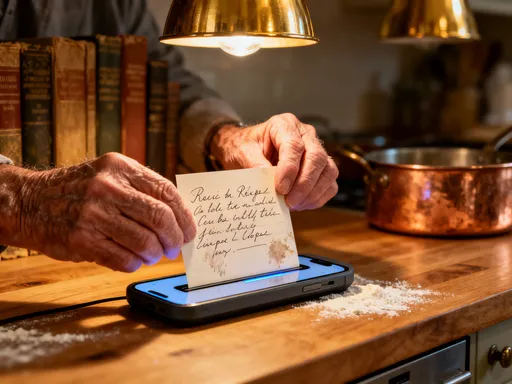
We started with no rules. Just, 'Let’s look at a few pictures before bed.' But over time, little themes began to emerge. One night, it was 'Pets We’ve Loved.' We laughed at the cat who hated everyone but the mailman. We got teary remembering the dog who used to meet the kids at the bus stop. Another night, we did 'Grandma’s Kitchen,' pulling up photos of her famous apple pie, her handwritten recipe cards, the way she always wore that green apron. My mother-in-law called the next day, touched that we’d remembered. 'You kept those pictures?' she said. 'I thought no one cared.'
That’s when I realized this wasn’t just about us—it was about showing people they’re remembered. That their stories matter. That their presence in our lives has left a mark. And the more we did it, the more natural it felt. We didn’t need to plan it. It became as routine as brushing teeth or saying goodnight. Some nights we’d only look at three photos. Other nights, we’d lose track of time, following one memory into another, like stepping through a door into another version of ourselves.
The consistency was what built trust. The kids knew they could count on this time. They started adding their own photos—art projects, school plays, silly selfies. My husband began tagging old vacation shots with little notes: 'This is where we saw the deer,' or 'You wore that blue hat the whole trip.' These weren’t grand gestures. They were quiet acts of love, woven into the fabric of our days.
When Technology Lets Humanity Shine
The real magic didn’t happen in the photos. It happened in the spaces between them. In the silence after a story. In the way my daughter held my hand when we saw a picture of her at the hospital last year. In the way my husband looked at me and said, 'We got through that, didn’t we?'
What I didn’t expect was how this simple practice would uncover layers of us we’d forgotten. My mother-in-law, usually reserved, opened up about her first job, her dreams of being a teacher, the year she spent traveling before settling down. My son asked questions about our wedding—'Did you really dance in the rain?'—and when I said yes, he said, 'That’s so cool. I want a wedding like that.' It wasn’t just nostalgia. It was identity. It was belonging.
And for me, it was healing. Seeing myself through the lens of years—laughing, crying, holding babies, standing beside people I love—reminded me of who I am beyond the daily grind. I’m not just a mom, a wife, a planner, a fixer. I’m someone with a history, a heart, a story. And so are they.
Technology didn’t create these moments. But it gave us a doorway. It held the memories so we could focus on the meaning. It asked nothing of us but to show up. And in return, it gave us something priceless: the chance to see each other not just as we are today, but as we’ve always been—connected, loved, and part of something bigger.
A Simpler Kind of Togetherness
We don’t need grand reunions or expensive trips to feel close. What we need are small, repeated moments of presence. A photo. A story. A shared laugh in the dark. These are the threads that weave the fabric of family.
The shared album didn’t change our lives overnight. But it changed the texture of our days. It brought warmth back into the evenings. It reminded us that we’re not just living under the same roof—we’re part of the same story. And that story is still being written, one quiet night at a time.
What started as a way to reduce screen time became a way to deepen connection. What seemed like a simple tech tool became a vessel for love, memory, and belonging. And the best part? Anyone can do it. You don’t need the newest device or the most advanced app. You just need a few photos, a little time, and a willingness to look up and say, 'Remember this?'
Because in the end, it’s not about the pictures. It’s about what they help us remember: that we are known. We are seen. We are together. And sometimes, that’s enough.