Tired of Saying 'I’ll Fix It Later' About My Energy Bill? This Tool Finally Made Saving Effortless
We’ve all been there—staring at a high energy bill, promising to “figure it out next month,” only to keep putting it off. I felt the same, until a simple tech tool quietly transformed how I manage energy at home. It didn’t just cut costs—it brought peace of mind. No complicated settings, no guesswork. Just real-time insights that helped me make smarter choices, every day. And the best part? It fits perfectly into the chaos of real life.
The Moment I Realized My Home Was Working Against Me
It hit me one winter evening as I walked into a house that felt too warm—almost stuffy—and saw the thermostat glowing at 78 degrees. My son had just come home from soccer practice, cranked up the heat, and forgotten about it. I stood there, annoyed but also exhausted from the day, knowing full well this wasn’t the first time. How many times had I passed a room with the lights blazing, or found the TV still running in standby mode, sipping energy all night? I wasn’t lazy—I cared about saving money and being responsible—but between school drop-offs, meal prep, and work deadlines, tracking every appliance felt impossible.
The real wake-up call came with the monthly bill. $230. Again. I remember sitting at the kitchen table, coffee gone cold, scrolling through the charges, feeling a knot tighten in my stomach. This wasn’t just about money—it was about control. I wanted to do better for my family, for our budget, and for the planet, but I didn’t know where to start. Every suggestion I read online felt overwhelming: “Seal your windows,” “Upgrade your insulation,” “Install solar panels.” Great advice—if you have time, money, and a contractor on speed dial. But for someone like me, juggling a thousand little things every day, it all just added to the guilt. I kept telling myself, “I’ll fix it later.” But later never came.
What I didn’t realize then was that the problem wasn’t my willpower—it was the lack of feedback. No one was showing me what was really happening behind the walls. I couldn’t manage what I couldn’t see. And honestly, I didn’t even know I needed help until something finally stepped in—not a person, but a small, unassuming device that started paying attention when I couldn’t.
Discovering the Tool That Changed Everything
I first heard about continuous energy monitors from a friend during our weekly coffee catch-up. She mentioned how her energy bill had dropped by nearly 20% without changing much at home. I rolled my eyes—another “miracle” gadget, I thought. But then she showed me her phone. There it was: a simple dashboard showing exactly how much power her home was using, broken down by time of day. She pointed to a spike at 3 p.m. “That’s when the kids come home and turn on every light and the TV,” she said, laughing. “Now I just send them a quick text: ‘Hey, can someone turn off the hall light?’”
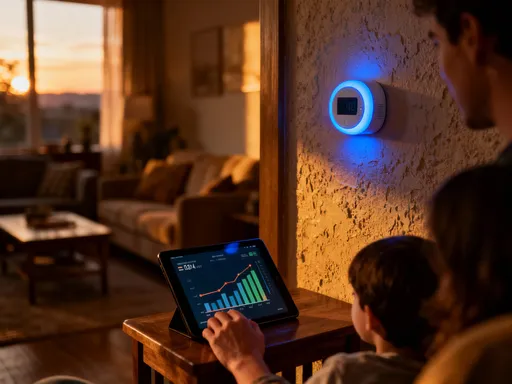
Skeptical but curious, I looked into it. What I found wasn’t some complicated smart home overhaul. It was a small device—about the size of a Wi-Fi router—that connects to your home’s electrical panel. No rewiring. No electrician needed for most setups. You just clip it on, sync it with an app, and within minutes, it starts tracking your home’s energy use in real time. No cameras, no microphones—just sensors that measure electricity flow. It felt less like installing tech and more like adding a quiet observer who actually cared about my peace of mind.
I ordered one the next day. When it arrived, I almost put it back in the box. What if it didn’t work? What if I messed up the installation? But the setup guide was surprisingly clear, with step-by-step photos and a short video tutorial. My husband helped me for five minutes—just long enough to attach the sensor clips—and then it was done. Within an hour, I was looking at my home’s energy use on my phone. Not estimates. Not averages. Real data. And for the first time, I wasn’t guessing—I was seeing.
How It Quietly Learned Our Family’s Rhythm
What surprised me most wasn’t the numbers—it was how quickly the system adapted to *us*. This wasn’t a rigid, one-size-fits-all tool. It started learning our patterns: when the kids got home, when we cooked dinner, when the washer ran late at night. It didn’t judge. It just observed. After a few days, it began to recognize what “normal” looked like for our house. And then, it gently pointed out what wasn’t.
One morning, I got a summary in the app: “Your kitchen used 30% more energy overnight.” I was baffled—until I remembered leaving the oven on “warm” after baking cookies the night before. I hadn’t even noticed. Another time, it flagged the guest room, where a space heater had been running for 12 hours straight—left on by my teenager who forgot to turn it off after studying. These weren’t huge mistakes, but they were exactly the kind of small oversights that had been draining our budget for years.
The beauty of it was that it didn’t require me to be perfect. I didn’t have to memorize every appliance or patrol the house like a detective. The tool was doing the noticing for me. It became like a thoughtful housemate—one who doesn’t nag, but quietly says, “Hey, the iron’s still on,” so you can fix it without stress. And because it learned our rhythm, it knew when a spike was unusual. A sudden jump at 2 a.m.? That got my attention. But the usual post-dinner surge? It didn’t alarm me—because it knew that’s when we cook, do homework, and unwind.
Small Alerts, Big Changes
The first alert I got was simple: “Your living room heater has been on for 5 hours.” It wasn’t a red warning. No siren. Just a soft notification, like a friendly tap on the shoulder. I looked at the time—9:14 p.m.—and realized the heater had been running since after dinner. The kids were in bed, and no one was in the room. I walked over and turned it off. That small moment felt like a win.
But the real change came from repetition. Over time, those gentle nudges started shaping our habits. I began checking the app before bedtime, like a nightly ritual. “Let’s see what we can turn off,” I’d say to myself. The kids got curious. “Mom, why is the blue bar so high today?” my daughter asked one afternoon. I showed her how the dishwasher, the TV, and the gaming console were all drawing power. She ran to unplug the game system—“I’m saving energy!” she announced proudly.
What I loved was that it made conservation feel doable. It wasn’t about drastic changes or giving up comfort. It was about awareness. I started adjusting the thermostat earlier in the evening, knowing we’d be going to bed soon. I unplugged the coffee maker after breakfast. I switched to LED bulbs in the most-used rooms. None of these were heroic acts—but together, they added up. And the tool didn’t just show me waste; it showed me progress. Seeing the weekly usage drop by 10%, then 15%, gave me a quiet sense of pride. I wasn’t just cutting costs—I was building better habits, one small choice at a time.
Coordinating Without the Chaos
One of the unexpected benefits was how it improved communication in our home. Before, energy was a source of friction. “Did you turn off the garage light?” I’d ask my husband. “I thought you did,” he’d reply. Now, we don’t have those conversations anymore. Instead, we share the app. It’s become our family’s energy dashboard—a neutral, fact-based tool that removes blame.
Every Sunday night, we spend five minutes together looking at the weekly report. “Look,” I’ll say, “we used less energy this week than last.” The kids love seeing the green “down” arrow. My son started a little competition with his sister: whoever remembers to turn off the most lights gets to pick the movie on Friday night. It’s silly, but it works. And my husband? He’s the one who now texts me if he sees a spike while he’s at work. “Kitchen’s high—did you leave the oven on?”
What used to feel like my responsibility alone became a team effort. No more guilt. No more nagging. Just shared awareness and small wins. The tool didn’t just connect to our electrical panel—it connected us. We weren’t just saving energy; we were learning to care for our home together, with less stress and more teamwork.
Beyond Savings: What We Gained Was Control
Yes, the numbers speak for themselves. Our energy bill dropped by 22% in the first three months. That’s nearly $60 a month—money we’ve redirected to our vacation fund. But the real savings weren’t just financial. It was the mental load that lifted. I no longer dread opening the utility statement. I don’t feel guilty about turning on the heat in winter or using the dryer on rainy days. I know what we’re using, why we’re using it, and how to adjust if needed.
For the first time in years, I feel like I’m in charge of my home—not racing to catch up after the damage is done. I’m making proactive choices. I can plan for higher usage during holidays or adjust when the kids have friends over. I’m not reacting to a bill—I’m managing a system. And that shift? It’s huge. It’s the difference between feeling powerless and feeling capable.
There’s also a quiet confidence that comes with understanding your home. I know which appliances are energy hogs. I know when our peak usage times are. I can make informed decisions—like running the dishwasher at night when rates are lower, or delaying laundry until weekends. It’s not about deprivation. It’s about intention. And that intention brings a kind of calm I didn’t know I was missing.
Why This Isn’t Just About Technology—It’s About Living Better
When I look back, I realize this little device didn’t just change how we use energy—it changed how we live. It gave us back time, money, and peace of mind. It turned a source of stress into a source of connection. It reminded me that technology doesn’t have to be flashy or complicated to be powerful. Sometimes, the best tools are the ones that work quietly in the background, supporting you without demanding your attention.
This isn’t about being a tech expert or living a perfectly eco-friendly life. It’s about progress, not perfection. It’s about having a little help so you don’t have to do it all alone. Because let’s be honest—being a mom, a partner, a homeowner—it’s a lot. We don’t need more to manage. We need things that manage *with* us.
If you’ve ever looked at your energy bill and thought, “I’ll deal with it later,” I get it. But what if “later” doesn’t have to come? What if you could start today—with something simple, something kind, something that actually fits into your real life? This tool didn’t just save me money. It saved me from the guilt, the guesswork, the constant “I should do better.” It gave me back a sense of control—and honestly, a little more joy in the everyday.
So maybe it’s time to stop saying “I’ll fix it later.” Maybe it’s time to let a little quiet tech help you live with a little more ease, a little more clarity, and a lot more peace. Because you don’t have to do it all. You just have to start—with something small, something smart, and something that truly understands your life.